Discover Yu Jian Cai’s artistry in Chaozhou pottery, blending ancestral techniques with contemporary designs to elevate the tea drinking experience.
### Breathing Life Into Tradition
In the heart of Chaozhou city's industrial district, Yu Jian Cai (蔡煜坚) patiently awaits visitors under the softening glow of evening light. Amidst sporadic rain, the gritty surroundings starkly contrast with the world he creates in his workshop—a sanctuary dedicated to the art of traditional pottery. Although the building itself offers no hints of the treasures within, Cai welcomes us inside, leading our small group through a series of stark, industrial staircases until we reach his creative space.
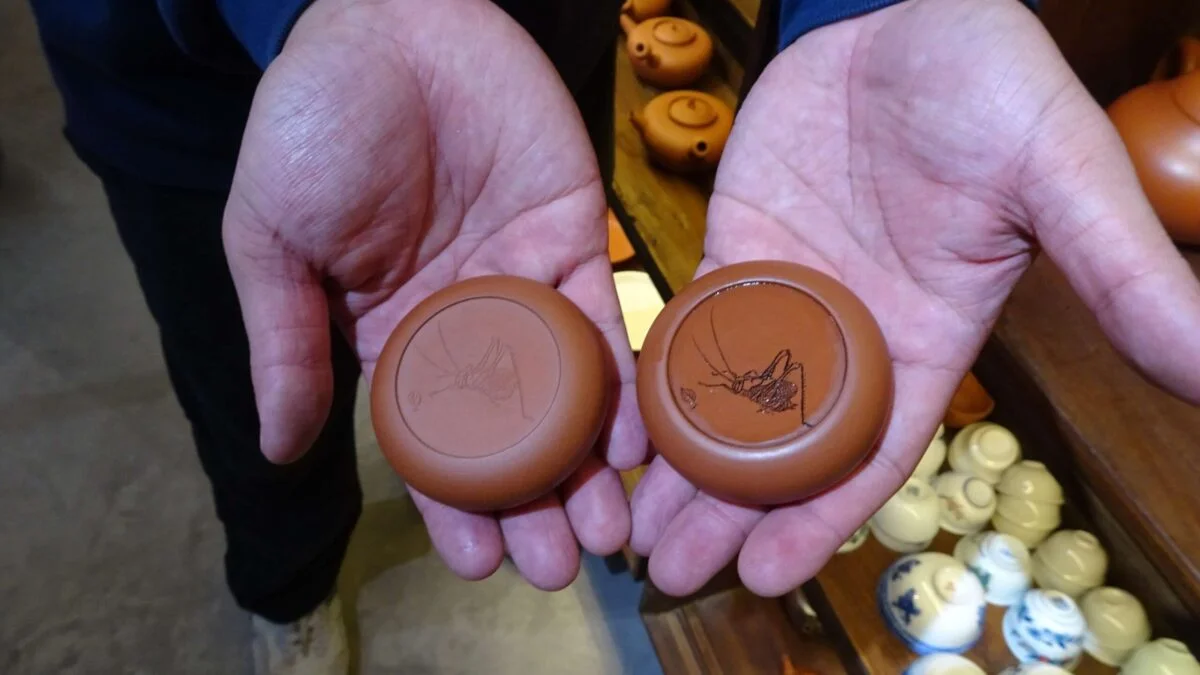
Once inside, the atmosphere shifts dramatically. A sheer bamboo-patterned curtain separates the workshop from a cozy tearoom, softly diffusing the light and setting an inviting tone. The workshop is dotted with task lamps and a significant workspace where Cai meticulously crafts teapots by hand. It’s a blend of practicality and artistry, with tools of the trade nestled between several finished pieces, embodying the rich history of Chaozhou pottery.
As we settle at the tea table, our curiosity is piqued by the eclectic curio cabinet that showcases vintage teapots and artifacts. Cai's passion for ceramics is palpable, underscored by a familial legacy steeped in the craft. “My father and grandfather were ceramicists. I have always been around clay,” he shares, recounting fond memories of childhood days spent in his family’s studio learning the foundations of teapot crafting. “At 19, my father introduced me to a teapot workshop, and that’s when my journey began.”
### The Essence of Chaozhou Teapots
A notable feature of Cai's work is his focus on the unique properties of Chaozhou red clay, particularly suited for making traditional teapots. This clay’s low shrinkage and high porosity give rise to smaller, more intricate designs that excel in heat retention, making them ideal for brewing Phoenix Dan Cong tea. Locals often appreciate the detailed craftsmanship of these teapots, favoring them over ceramic or porcelain alternatives because they enhance the aromatic experience with every infusion.
Cai reflects on how tea drinking is not just a ritual but a way of life in Chaozhou. “We’ve been drinking Dan Cong tea since childhood,” he explains, sharing how elders taught him the intricacies of Gongfu tea preparation from a young age. It’s a cultural heritage that deeply informs his artistry.
### An Artisan Innovating Tradition
Cai's signature pear-shaped teapot design is a testament to his integration of ancestral techniques with contemporary practice. Inspired by patterns from the Qing Dynasty, he has dedicated himself to perfecting this style since 2018, aiming to create the smallest functional version, estimated to hold just 50ml. His determination to blend tradition with innovation portrays a nuanced relationship between historical reverence and the evolution of the craft as he prepares for its future.
In this delicate balance, Cai also experiments with creative accessories like tea pets—ceramic figurines that accompany the tea-drinking experience. These unique creations, ranging from playful animals to whimsical designs, serve both as companions and gentle reminders of tradition as they gather a patina over time from the tea excesses poured over them.
As the tea session unfolds, soothing guqin melodies fill the studio, reflecting Cai's ability to harmonize the past and present. With every infusion of fragrant Dan Cong tea, he invites us into a world where artisanal skill and cultural tradition meet, ensuring that the future of Chaozhou pottery is in capable and imaginative hands.



Discussion
Sign in to join the discussion.