EHL's 2026 report unveils essential insights into the psychological well-being of hospitality employees and guests, highlighting holistic strategies and industry shifts.

The recent Psychological Well-being in Hospitality Report 2026, developed by EHL, serves as a vital exploration into a frequently overlooked aspect of the hospitality industry. Authored by Dr. Valentina Clergue and Nicola Gryczka Kirsch, this edition builds on interviews with 48 industry and academic experts to distill five pivotal developments redefining the understanding of psychological well-being for both guests and staff.
Over the last decade, hospitality has invested heavily in visible wellness features—gyms, spas, curated sleep experiences, and even in-room meditation options. However, the deeper, less tangible aspects of well-being often get sidelined, leading to a significant gap in how both guests and employees experience their time within these environments.
Key Insights
- Well-being encompasses a broad spectrum yet remains fragmented in practice; many initiatives focus on just one or two dimensions.
- The mental health of employees plays a critical role in determining the guest experience, revealing a structural relationship.
- Guests today are more interested in finding purpose and transformative experiences during their stays rather than mere comfort.
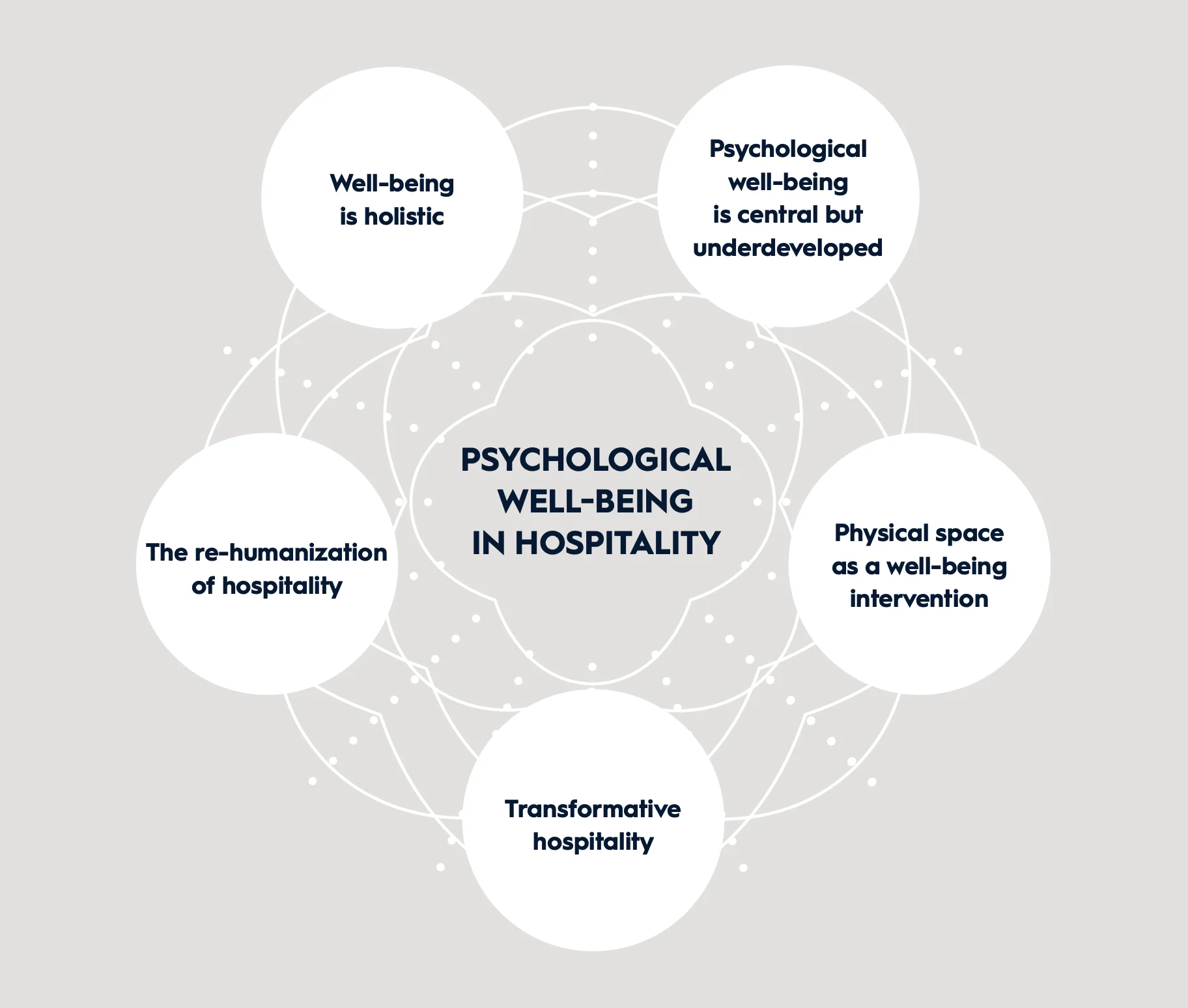
A Holistic View of Well-being

The report asserts that well-being cannot be simplified into a singular metric or amenity. It recognizes the interconnectedness of various dimensions—physical, mental, emotional, social, spiritual, and financial—arguing that neglecting any one area adversely impacts the others.
Despite rising awareness of well-being, interviews reveal that the practical implementation within the hospitality sector remains lacking. Many practices cater to just one aspect of well-being, resulting in an incomplete approach. Elina Ivanova-Atanassov aptly casts a critical eye, asserting, "A meditation app on the television, a pillow menu, and access to a fitness center are additions to an otherwise transactional experience." These elements fail to signify a genuine commitment to well-being.
The cultural context further complicates the well-being narrative. Predominantly shaped by Western academia, existing frameworks may not resonate across diverse cultural landscapes, limiting their effectiveness.
The Psychological Dimension

At its core, hospitality thrives on psychological engagement. Every touchpoint within the guest experience can either bolster or undermine psychological well-being. Unfortunately, much of the sector's investment remains heavily skewed towards visible wellness features, often at the expense of addressing the invisible elements of emotional design and mental safety.
Dr. Aradhana Khowala identifies this neglect as invisible well-being, emphasizing the importance of emotional connections within the guest journey and the psychological support needed for employees. Challenges like chronic understaffing and unpredictable schedules contribute significantly to this oversight. Dr. Natalie Grinvalds describes the current state as neglect disguised in care rhetoric, while Dr. Alyson Meister critiques the "badge of honor" mentality surrounding grueling hospitality work stemming from historical practices.
Moreover, the terminology surrounding well-being often dilutes its significance, making it difficult for organizations to genuinely embody the principles it seeks to uphold.
Re-Humanizing Hospitality

As the industry has moved toward standardization, the warmth of human connection has dimmed. Guests now express a desire for more authentic interactions within their stays. The report strongly indicates that employee psychological well-being directly influences the quality of guest experiences. Rainer Stampfer from Four Seasons Hotels & Resorts stresses that service excellence is fundamentally an emotional exchange, a task that is unattainable when staff are fatigued or anxious.
Standing at this intersection, technology can play a supportive role in enhancing human connection rather than detracting from it. By minimizing operational friction, automation can help rise to the growing expectations for personalization in hospitality.
Well-being Infrastructure in Design

Environmental psychology and neuroarchitecture are emerging fields that reveal how physical spaces can profoundly influence psychological well-being. Factors such as room dimensions, ceiling heights, and acoustic environments are shown to affect stress responses significantly.
As a result, contemporary hotel designs are focusing on creating spaces that prioritize how environments interact with human emotions, rather than merely presenting amenity lists. Notable examples include Forestis in the Dolomites, where wellness is integrated into the guest experience without a traditional wellness program, and Ett Hem in Stockholm, which achieves a homely atmosphere by blending front- and back-of-house functions.
Towards Transformative Hospitality

There's a palpable shift in guest expectations, with many seeking eudaimonic experiences characterized by personal growth, meaning, and perspective instead of mere indulgence. This aligns with Pine and Gilmore's concept of the transformation economy, which emphasizes emotional and cognitive changes over transactional comfort.
While the ethical implications surrounding hospitality's role in well-being are complex, the industry uniquely positions itself to foster environments conducive to personal well-being.
Psychological Well-being: A Leadership Imperative
As psychological well-being initiatives evolve into core components of hospitality infrastructure, it becomes clear that merely promoting visible programs won't suffice for meaningful change. Ignoring employee well-being will ultimately impair service quality and sustainability.
It’s apparent that many industry leaders still grapple with adapting their skill sets to current demands. For example, The Breakers Palm Beach stands out with an employee well-being model that includes on-site mental health resources, achieving impressive staff retention and high employee satisfaction. This shows how significant investments in well-being can yield positive organizational outcomes.
For comprehensive insights, including all five key developments and detailed case studies, download the full report and explore its recommendations for cultivating psychological well-being in hospitality.



Discussion
Sign in to join the discussion.