Allie Taylor plans to expand affordable veterinary care, support community rescuers and bring animal welfare into more city decisions.


New York City’s next animal-welfare test will be whether its laws and public commitments translate into care people can actually reach. Allie Taylor, founder and former president of Voters For Animal Rights (VFAR), has taken over as director of Mayor Zohran Mamdani’s Office of Animal Welfare. Her priorities point toward the everyday systems behind animal welfare: veterinary access, shelter intake, support for neighborhood rescuers and coordination across city agencies.
Taylor’s appointment brings an advocate who helped campaign for some of the city’s recent animal protections into City Hall. Mamdani has also appointed lifelong vegan Siddhartha Sanchez to lead the city’s food policy, placing animal welfare and food systems among the issues receiving attention in the new administration.
From passing laws to making them work
Taylor founded VFAR in 2016 to give animals and the people who care for them a stronger voice in political decisions. The organization led the campaign for Intro 1233, the 2017 law prohibiting wild animals in entertainment, and worked alongside other nonprofits on additional animal-protection measures. Taylor cites the foie gras sales ban, the circus restriction and the first public funding for spay-and-neuter services among the changes achieved through those efforts.
Over the past decade, the city has also barred circuses from using elephants and other wild animals, restricted pet stores from selling dogs sourced from puppy mills and established an NYPD Animal Cruelty Investigation Squad. Horse-drawn carriages are also set to be banned from the city’s parks for good.
For Taylor, working inside government changes the practical focus. Advocacy outside City Hall meant organizing supporters, building coalitions and urging elected officials to act. In her new role, she can work with the agencies, budgets and daily decisions that determine whether a policy has an effect on animals’ lives.
She points to the Backyard Breeder law as an example: passing a measure is only one part of the job. The city also needs to decide who will enforce it and what resources implementation requires. That operational work, she says, is where her office can help turn policy into results.
 VFAR
Care that reaches every borough
Taylor’s first priorities are rooted in her own experience as a Brooklyn-based TNR (Trap-Neuter-Return) cat rescuer. Finding veterinary care, arranging foster homes and helping neighbors keep animals they love are recurring challenges she has encountered on the ground. She wants to expand free and low-cost veterinary services, with spay-and-neuter care available in every borough.
Access depends on more than whether a service exists. Residents have to be able to reach it while managing work, transportation costs and family responsibilities. Taylor says her office will draw on the experience of rescuers, wildlife rehabilitators and pet owners to identify where services should be located and what barriers keep people from using them.
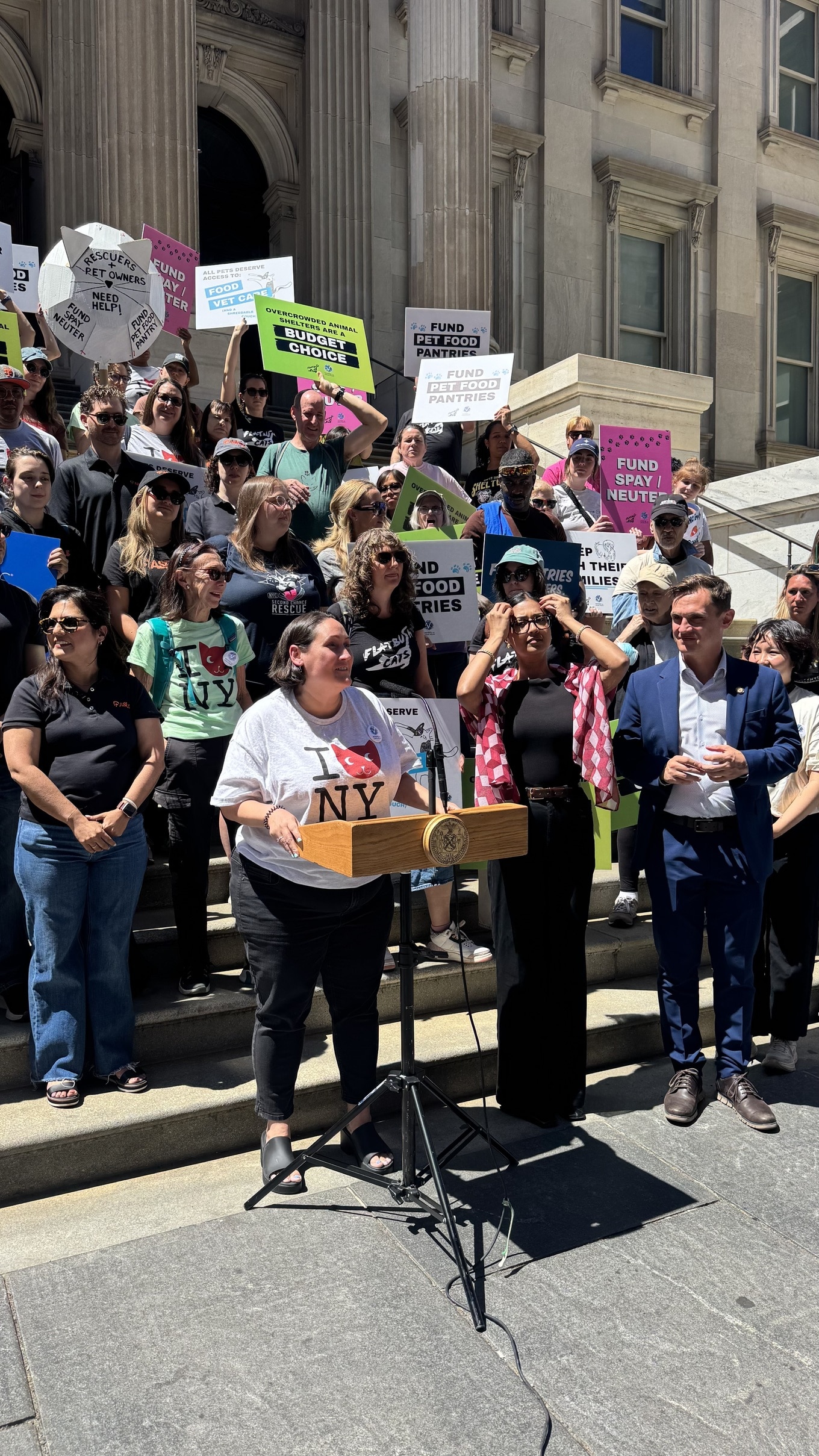
The city is funding spay-and-neuter services through Flatbush Cats in Brooklyn, a program open to residents from all five boroughs. Taylor sees that effort as a starting point for expanding options closer to where people live. She also wants to direct resources toward areas with substantial unmet need, including the Bronx.
Another proposal is to make pet food available through existing human food pantries. Placing food for animals alongside support families already use could make it easier for people to care for every member of their household. Taylor’s broader point is that financial hardship shouldn’t be treated as evidence that someone cares less about an animal.
"I also want us to recognize that struggling financially does not mean someone loves their animal any less. Our policies should help people care for the animals they love. Pet-inclusive housing, food access, and veterinary care all have to be part of that conversation."
 VFAR
Rescuers and agencies share the work
Community rescuers are central to Taylor’s plans. Many spend their own money and time caring for animals, often identifying urgent needs before public agencies do. She wants those residents and neighborhood groups to keep a meaningful place in policy discussions, and says the city should support the work they already perform.
That approach also shapes her plans beyond companion animals. Taylor wants to relaunch the city’s animal hoarding task force and improve coordination among agencies. Her office also addresses animals used for food and entertainment, as well as wildlife living in the city.
Pigeons, raccoons, turkeys, deer and other wild animals share New York with its residents. Taylor wants city agencies to use compassionate approaches to coexistence and have clear responses when wildlife is injured or in danger. That work includes coordination with rehabilitators and attention to how construction, maintenance and other city operations affect animals and their habitats.
The wider challenge is that animal welfare cuts across responsibilities often handled separately. Housing, public health, emergency response and food policy can all affect animals and the people who care for them. Taylor wants the city to consider those effects throughout its work, rather than leaving animal issues to a single office.
Measuring progress by what happens before a crisis
Taylor’s goals for the end of her tenure are expressed in practical terms: fewer animals entering NYC Animal Care Centers because their families can’t afford to keep them, and fewer kittens born among the city’s estimated 500,000 community cats. She wants affordable veterinary care and spay-and-neuter services available in every borough, with stronger support for rescuers.
Those aims make prevention a central measure of the office’s success. Affordable care, access to food and help for community caregivers could address some of the pressures that lead families to surrender pets or leave outdoor cats without support. The work will depend on whether the city can connect policy to reliable services and give neighborhood organizations a role in shaping them.
Taylor will remain involved with VFAR in an advisory capacity, carrying her experience in grassroots advocacy into the city administration. Her measure of lasting progress is whether animal welfare becomes part of routine government decisions—and whether the programs built now can keep preventing suffering after her time in the role ends.



Discussion
Sign in to join the discussion.