As luxury spending growth cools, brands face competition from travel, wellness, dining and exclusive experiences for consumers’ time and loyalty.
Luxury is becoming a contest for people’s time
The biggest shift in luxury is happening around the purchase. A fashion house may now compete for the same discretionary spending as a private club, a wellness retreat, a fine-dining destination, an F1 hospitality package, a yacht charter or a rare travel experience. That’s more than a marketing challenge: it changes what counts as a competitor.A slower market puts value under scrutiny
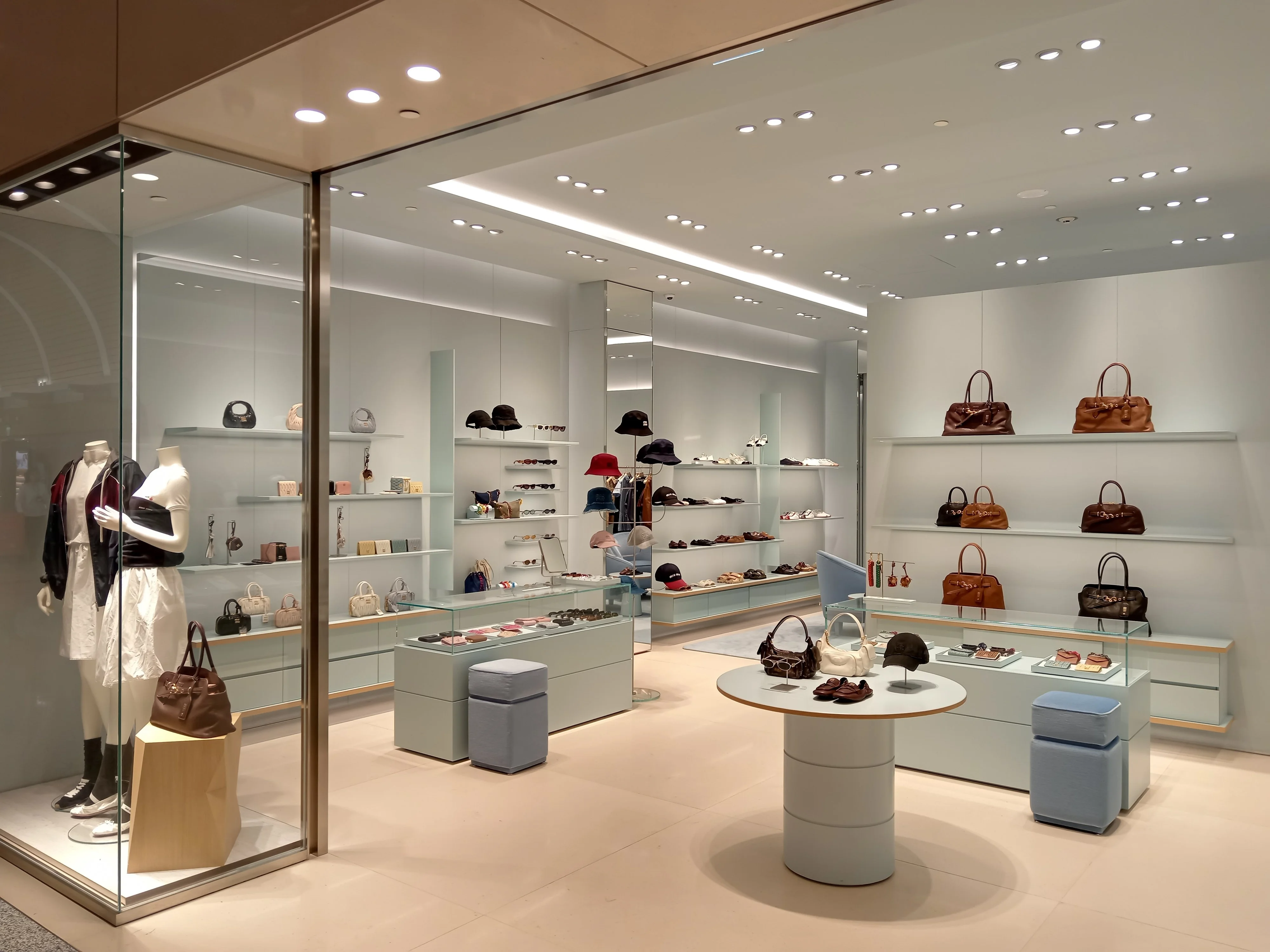 Luxury brands enjoyed a strong rebound after the pandemic: travel resumed, stores reopened, social spending returned and price increases lifted revenues. That acceleration has cooled. The question now is whether consumers still see the quality, creativity and service behind luxury prices.
McKinsey describes a significant slowdown in the luxury goods industry, with value creation under pressure for the first time in years outside exceptional crisis periods. The data doesn’t fully explain how much of that pressure comes from consumers pulling back versus questioning what they get for the price. Either way, the post-pandemic tailwind is fading.
This is more significant than it looks. A slowdown doesn’t make luxury irrelevant; it raises the bar for attention, loyalty and price premiums. Scarcity can still attract buyers, but scarcity without a compelling reason to care is a thinner proposition.
The market extends beyond goods
Fashion, leather goods, watches, jewelry and beauty remain central to luxury, but they don’t cover the whole market. Luxury consumers organize around identity, aspiration, access and how they spend their time—not industry categories.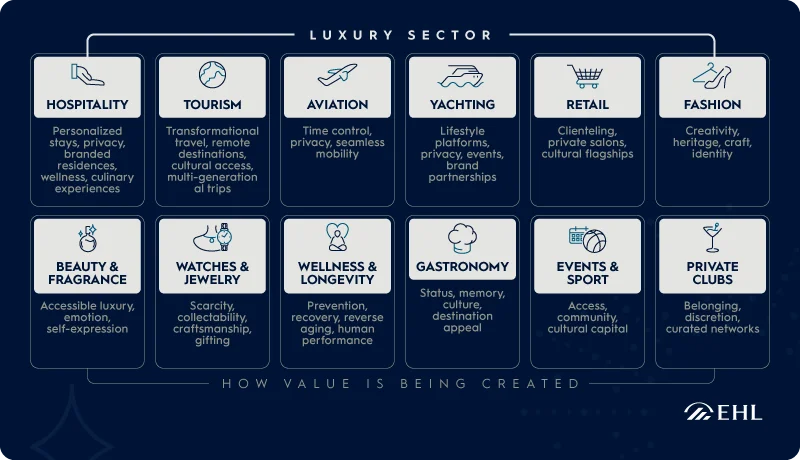 Someone considering high jewelry may also be weighing a wellness trip, a private club, an art-fair itinerary or a branded residence. The competitive set is expanding with those choices. For luxury businesses, the useful measure is not just share of wallet, but share of a client’s lifestyle. Partnerships, hospitality and services can extend a brand’s reach beyond its products.
Experiences are taking a larger share of luxury
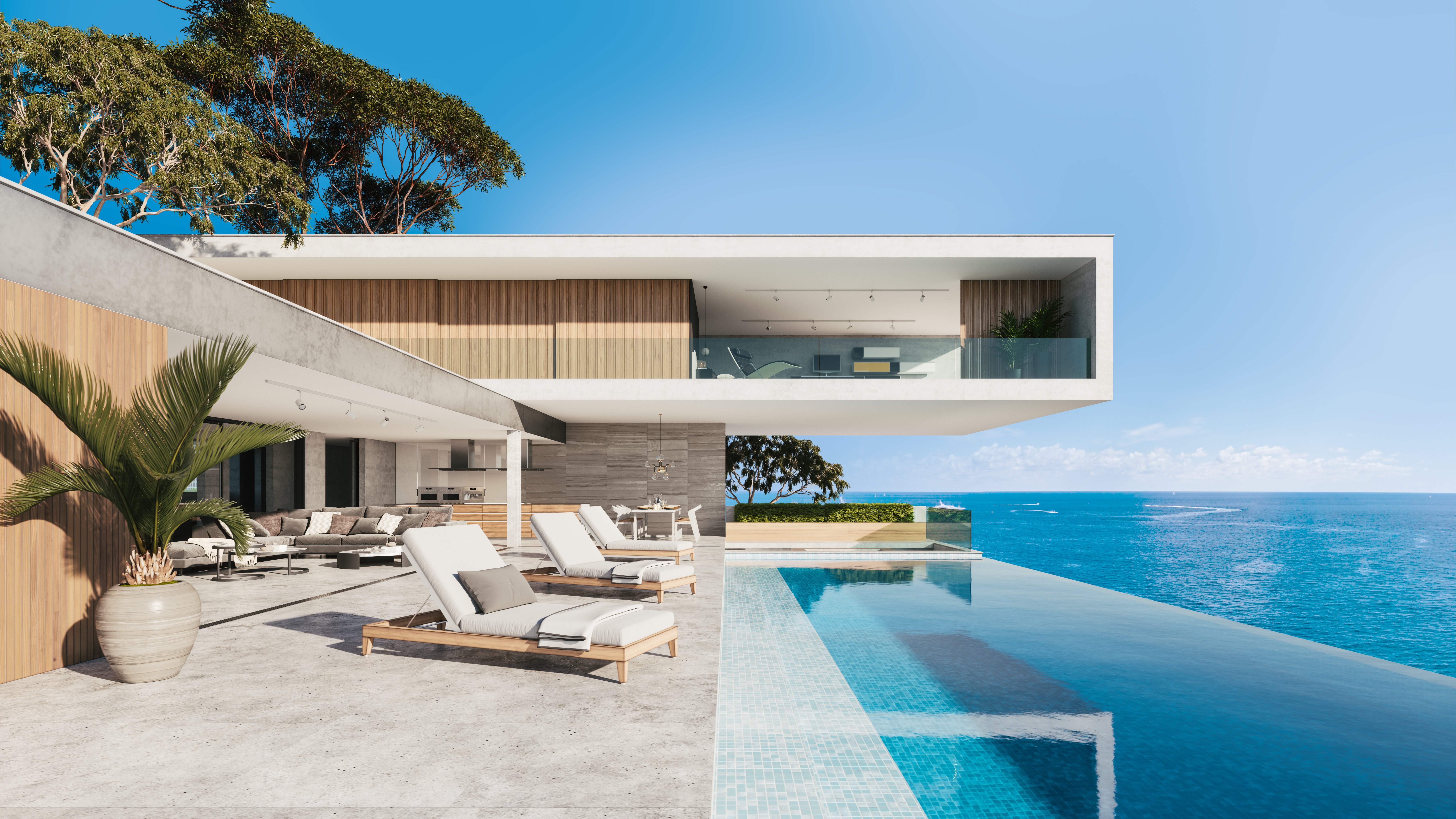 Affluent consumers continue to buy products, while spending on travel, dining, wellness, culture, sport, entertainment and exclusive access. Bain and Altagamma point to structural shifts that are giving experiences a bigger role in the luxury economy. Generational change is part of that story, but the deeper shift is how wealthy consumers define value.
A private villa with a culinary team, a longevity retreat with medical-grade diagnostics, a backstage cultural visit, a private art-fair viewing, a members-only dining club, a yacht event, an F1 hospitality weekend or a bespoke family itinerary can offer something a product alone can’t: memory, belonging and a sense of personal significance. That emotional value may outlast the moment of purchase.
Here’s the thing: the product is only one part of the offer. The welcome, setting, story, service and follow-up all shape whether the experience feels worth the price.
Hospitality is becoming a business skill
Hospitality means more than hotels and restaurants. It involves anticipating needs, designing service and creating memories—skills that apply across luxury businesses. A jewelry boutique can borrow the intimacy of a private salon; a fashion flagship can act as a cultural meeting place; a wellness clinic can build trust through attentive care. A private aviation provider needs to recover gracefully when plans change, while a car brand should consider the ownership journey beyond the handover. Effortless service takes design, training, rituals, data, clear standards and staff empowered to use judgment. For brands, that makes hospitality a commercial capability: personalization and emotional intelligence can help earn repeat business.Affluent consumers are splitting into different groups

The entry-level customer is harder to recruit
Luxury brands have long brought aspirational buyers in through beauty, fragrance, small leather goods, entry-level accessories and accessible ready-to-wear. That path is under strain. Prices have climbed, younger shoppers are more selective, and some question whether product quality and creativity justify the premium. Bain’s 2025 outlook forecast a slight decline in personal luxury goods, even as the wider luxury market remained resilient. Brands face a delicate choice: pushing volume can weaken exclusivity, but shutting off accessible entry points can make it harder to build future loyalty. A considered client path can include products, digital contact, events and hospitality, each introducing the brand without flattening its identity.Top clients reward deeper relationships
McKinsey and Business of Fashion expect top-spending luxury clients to drive a disproportionate share of market growth through 2027. That makes relationship depth more valuable than broad-reach marketing. Recognition alone won’t satisfy these clients. They expect discretion, relevance and access, grounded in an understanding of their preferences, family context, travel patterns, privacy needs, cultural interests, service style and timing. Good clienteling uses that knowledge to make interactions easier, not to create pressure. Brands will need capable client advisors, strong CRM practices, service training and private experiences that build trust over time.Status is taking different forms
Younger affluent consumers still care about status, but the signals are changing. Taste, access, individuality, values, wellness, culture and insider knowledge may matter more than a visible logo. A vintage find, discreet hotel, chef-led dinner or private wellness membership can carry its own social meaning. Resale, vintage, archival fashion and collectible objects fit this preference for personal expression. The challenge for brands is to take part in art, music, sport, gastronomy, design and social communities without seeming opportunistic. Visibility matters less than whether the right people find the brand meaningful.Travel brings the experience economy into view
 Luxury travel puts several of these shifts in plain sight. Wealthy consumers are seeking time, privacy, wellbeing, family connection and meaningful access. Hospitality and mobility brands are being asked to make the journey feel personal and coordinated, from private villas to recovery retreats.
Hotels are testing what luxury can become
Hotels, resorts, private villas, branded residences and wellness destinations increasingly sell more than rooms. They sell privacy, care, time, identity and the possibility of change. In Deloitte’s 2026 luxury outlook, surveyed executives saw travel and hospitality as the segment with the highest growth potential among luxury categories. That makes hospitality a useful test bed for the broader market. Strong concepts combine distinctive architecture, local culture, credible food, wellness and recovery, privacy, family flexibility, digital support, human warmth and precise operations. Guests may expect flexible arrivals, tailored food, private activities, help with sleep, children’s programming or access to local culture. Other luxury sectors can take a cue from this: personalization and cultural context matter when they create a lasting impression.Mobility is part of the service
For wealthy clients, mobility provides control over time, privacy and continuity as well as transportation. Private aviation, yacht charters, helicopter transfers, chauffeured cars and airport services all contribute to the experience. A yacht can function as a hotel, club, wellness space, event venue and family retreat. It can also bring fashion, beauty, food, sport and destination marketing together in a single setting. Luxury mobility sits at the meeting point of hospitality, logistics, security and lifestyle. Every transfer and arrival either supports the brand promise or weakens it.Wellness is moving beyond pampering
Wellness has grown from a spa offering into a broader business opportunity. Affluent consumers are showing interest in sleep, nutrition, diagnostics, recovery, mental performance, preventive health and longevity. That shift raises expectations: a credible wellness offer needs expertise, not just soothing language. Hotels, resorts, clinics, private clubs, fitness brands, nutrition specialists and property developers can all play a role. Their offers need to balance medical credibility with hospitality, privacy, personalization, comfort, reassurance and support for lasting habits. Wellness is becoming a way to help clients feel and function better, rather than an amenity added to a stay.Retail stores need to earn the visit
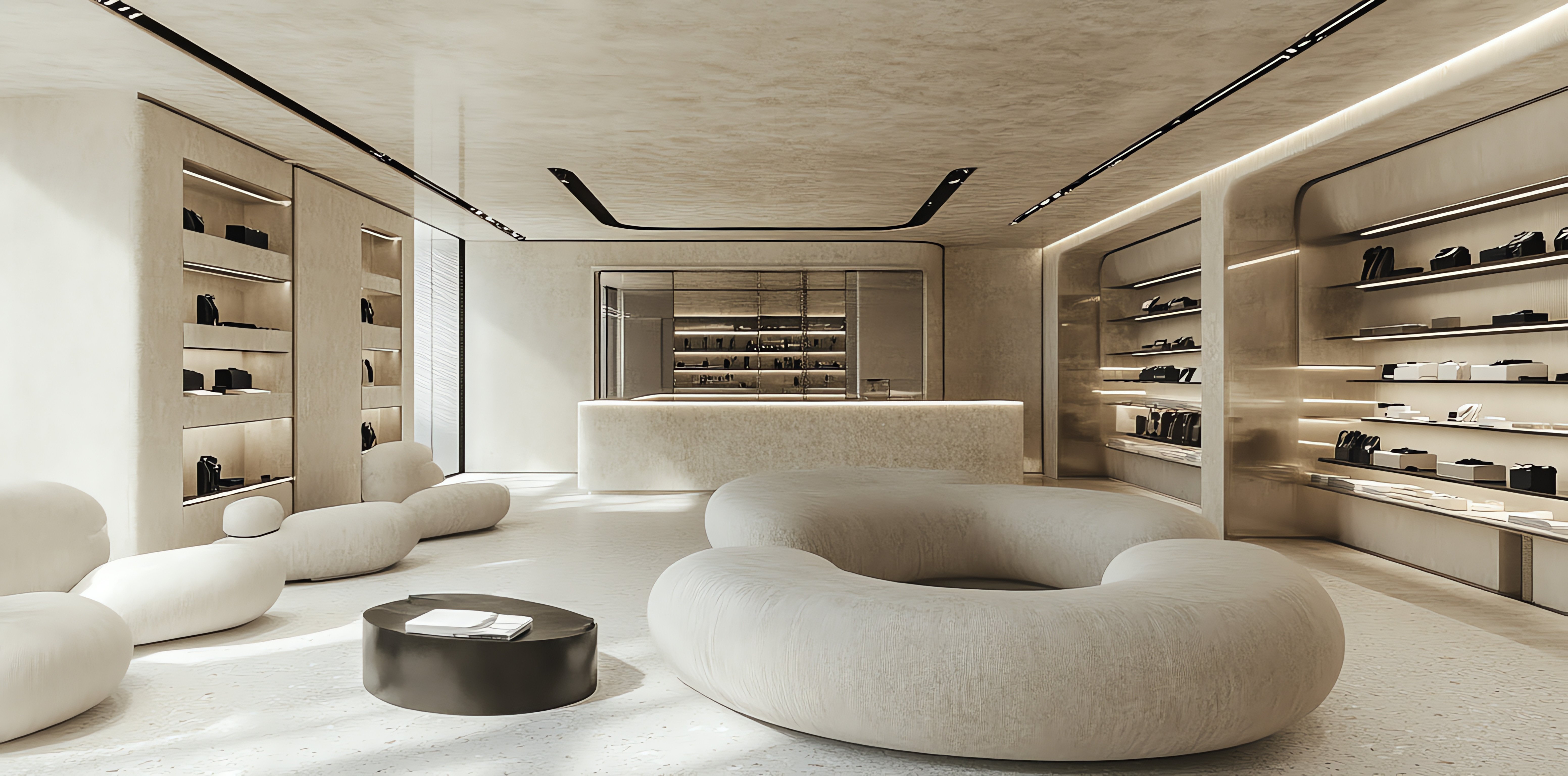 Luxury retail is shifting from display and transaction toward expertise, atmosphere, service and connection. A store still sells products, but it also has to give clients a reason to spend time there and return.
The flagship as a brand destination
The flagship is becoming an embassy for a brand’s values and identity: a place to host, teach, entertain and build relationships. Examples are already visible. Louis Vuitton’s “The Louis”, which opened in Shanghai in June 2025, is a 30-meter-high ship-shaped destination on Nanjing Road, with retail floors, an exhibition space and a café. The store is designed to give visitors a cultural outing as well as a shopping trip. Dior has taken a related approach in New York. Its flagship reopened in 2025 with the brand’s first permanent U.S. Dior Spa and a Dior Maison home boutique, making the address a broader lifestyle destination. Physical retail has to justify the effort of visiting. Digital sales are growing, city centers can be difficult to navigate, and extreme weather can make a shopping trip less appealing. Stores still offer what online channels can’t: human service, sensory detail, atmosphere and the feeling of being looked after. At their best, they give clients a calm place to pause amid a crowded city.A luxury store has to do more than close a sale. It should create an experience clients remember and a relationship they want to continue. The technology behind that experience works best when clients barely notice it.
Clienteling that feels personal
Knowing a client’s preferences has long been part of luxury service. Digital tools now help store teams keep that knowledge current. CRM platforms, clienteling apps, AI recommendations and shared service records can give associates a fuller picture of each relationship.
LVMH describes client development as equipping sales associates and store managers with deeper insight into client preferences, using advanced analytics, AI and clienteling tools. Reporting on AI in luxury retail points to customer profiles, smarter CRM systems and in-store technology that can help staff tailor service without interrupting the human exchange.
Here’s the thing: better information doesn’t automatically make an encounter feel more personal. If a recommendation seems automated or a brand appears to know too much, the same tools can erode trust. The standard should be quiet attentiveness: remember what matters, and use that knowledge with discretion.
What this means for luxury businesses:
Use data to help staff anticipate a client’s needs, while leaving room for human judgment. Personalization earns its place when it improves the service.
Resale is reshaping exclusivity
Secondhand luxury has moved into the mainstream conversation. BCG and Vestiaire Collective estimate that the global secondhand fashion and luxury market is growing at about 10% a year and could reach $360 billion by 2030. Their 2025 research also found that resale already accounts for a meaningful share of surveyed wardrobes, particularly handbags.
Buyers turn to vintage and pre-owned pieces for different reasons: a discontinued design, a more individual style, or a less costly way into a high-end category. For brands, resale can extend a product’s life and reinforce the value of an archive. It can also create problems when quality, pricing or production practices are poorly managed.
Rolex’s Certified Pre-Owned program offers one model for closer brand involvement. Official retailers authenticate secondhand watches, with Rolex verifying each watch and providing a two-year international guarantee.
What this means for luxury businesses:
Resale can support brand equity when it reinforces durability, heritage and scarcity. Treating it only as a threat overlooks the value of a product that remains desirable after its first sale.
Luxury Goods Market Trends: Craft, Scarcity And Value Scrutiny

Luxury consumers still value craft, heritage and rarity, but they’re scrutinizing price and quality more closely. That makes the source of a premium harder to take for granted. Brands have to show why a product merits its price through expertise, scarcity, emotional meaning and lasting cultural relevance.
Watches and jewelry hold their appeal
Watches and jewelry remain compelling categories, particularly for high-spending clients. Craft, collectability, gifting and emotional significance all contribute to their appeal. Precious metals, gemstones and mechanical complexity can also make their material value easier to understand than that of some fashion products.
Reuters reported that Rolex raised prices on gold watches for a second time in 2026, after another increase in January. Wealthy buyers remained resilient despite broader weakness in luxury, amid continued demand for scarce, high-end models.
That’s evidence of strength for Rolex, not a free pass for every brand to raise prices. Premiums hold when scarcity, trust and desirability reinforce one another.
What this means for luxury businesses:
Scarcity needs support from credible craft and disciplined supply. If a product lacks material or emotional value, limited availability alone may not persuade a skeptical buyer.
Fashion and leather goods face tougher questions
Fashion and leather goods remain central to luxury, but consumers are asking more of them. Bain and Altagamma forecast personal luxury goods sales of €358 billion in 2025, a mild decline from €364 billion in 2024.
Price fatigue is part of the problem. McKinsey’s 2025 analysis found that price increases accounted for more than 80% of market growth between 2019 and 2023, but that many aspirational consumers have reached a limit.
A high price alone no longer makes a handbag desirable. Buyers want to know what stands behind it: the design, leather, workmanship, heritage, service, rarity and cultural relevance.
What this means for luxury businesses:
Fashion brands need to renew desire with creative work, excellent products and storytelling. Pricing power has to be earned.
Beauty and fragrance as accessible luxury
Beauty and fragrance give clients a lower-cost way to engage with a prestigious brand, while still offering intimacy and emotional pull. A fragrance can become part of someone’s identity; skincare and makeup can create a daily connection. Those products also give younger consumers an entry point that doesn’t require a major purchase.
Recent U.S. figures show the category’s range. Circana reported that prestige fragrance sales grew 5% in dollars in 2025, while mass fragrance grew 15%.
Some brands are extending that relationship into hospitality and wellness. Dior’s restaurant in St. Tropez and its spa expansions bring dining, beauty, wellness and retail into a wider brand experience.
But wider access has a limit. If beauty becomes too widely available, too promotional or disconnected from a brand’s core identity, it can weaken its luxury appeal.
What this means for luxury businesses:
Beauty can bring future clients into a brand, provided the entry point feels considered and aspirational rather than mass-market.
Regional Luxury Market Outlook
Luxury demand remains substantial, but its growth is uneven across regions. Tourism, local purchasing power, cultural relevance, prices and regulation all shape the opportunity. A single global playbook won’t capture those differences; brands need to understand how clients discover and experience luxury in each market.
Europe: heritage under pressure
Europe’s place in luxury rests on craftsmanship, fashion capitals, cultural institutions and tourism. Paris, Milan, London, Geneva and Florence continue to influence how luxury is imagined around the world.
That advantage comes with pressure from high operating costs, changing tourism patterns, shifting tax dynamics and competition from newer luxury hubs. Heritage only works when it feels alive. Historic maisons, archives and craft traditions need to translate into experiences that matter to clients now.
What this means for luxury businesses:
European brands need to protect their heritage while updating service, retail, hospitality and digital engagement.
The United States: wealth, with more selective spending
The United States remains a major luxury market, supported by concentrated wealth, entrepreneurial culture and strong domestic consumption. Yet purchasing power doesn’t mean clients will spend indiscriminately. Affluent buyers increasingly weigh luxury against travel, property, wellness, education, events and other lifestyle choices.
Income alone offers an incomplete picture. Geography, values, family structure, lifestyle and the occasion all shape what a client wants.
What this means for luxury businesses:
In a mature market, growth depends on understanding individual clients more deeply than broad assumptions about wealth allow.
China and Asia: a changing luxury journey
China remains central to luxury’s future, even as demand has become harder to predict. Consumer sentiment, property-market pressures, concerns about youth unemployment and changing travel patterns have all weighed on spending. China’s personal luxury goods market contracted in 2025 after a sharper decline in 2024, with signs of stabilization and the possibility of a modest rebound in 2026.
The shift is better described as recalibration than retreat. Chinese clients are engaging with luxury across a wider regional network of travel destinations, digital channels and cultural influences. South Korea is one important node: Seoul’s retail, beauty, fashion, hospitality and duty-free sectors have attracted Chinese shoppers, while Korean culture continues to shape tastes across Asia.
Yet the shopping pattern is changing. Korea’s duty-free sector has struggled with falling sales despite the recovery in inbound tourism, as foreign visitors move toward trend-led, local and experience-focused retail. Chinese shoppers now compare service, prices, cultural relevance and brand meaning across markets; traditional duty-free shopping no longer tells the whole story.
For brands, that means considering mainland China alongside Hong Kong, Macau, South Korea, Japan, Singapore and Southeast Asian travel hubs. Each plays a different role in how Chinese clients encounter and assess luxury.
What this means for luxury businesses:
China calls for patience, localization and regional knowledge, rather than short-term expectations. South Korea, too, is more than a tourist shopping stop: travel, culture, hospitality, entertainment and digital influence all shape the luxury journey.
The Middle East and India: growth built on local understanding
Deloitte identifies China, Japan, the Middle East and India as influential growth engines for 2026, supported by domestic demand, tourism, retail investment and expanding affluent populations.
The Middle East is a major market for luxury hospitality, retail, aviation, real estate, events and wellness. High service expectations, privacy, family travel and a strong hospitality culture support demand for elevated experiences.
India is attracting greater attention as wealth, luxury awareness and domestic premium consumption grow. Reuters reported that BMW’s MINI sees India as a high-potential emerging market, citing rising affluence and growing awareness of global luxury trends.
What this means for luxury businesses:
Distribution alone won’t build a position in a growth market. Brands need local knowledge, adapted service, experiences that account for families and long-term investment in relationships.
Industry Challenges Facing Luxury Businesses
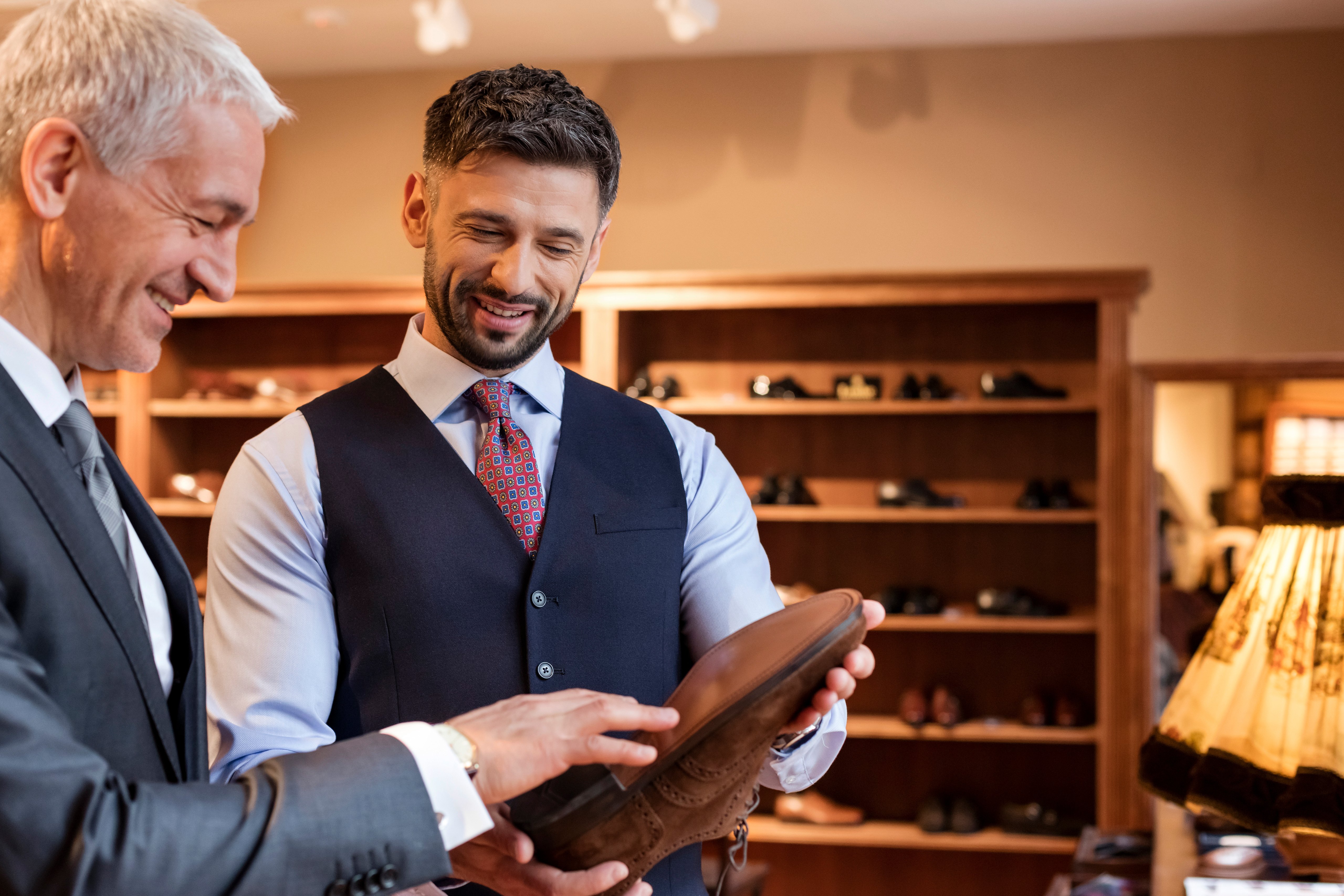
Consumers are more cautious about what luxury costs and what they receive in return. After years of price increases, prestige alone is less persuasive. Brands have to defend their premiums with product quality, creativity, service, scarcity and trust.
The price-value test
For years, strong demand, controlled supply and brand momentum helped consumers accept rising prices. That tolerance is fading.
Buyers compare quality, resale value, service and a brand’s conduct. They notice when prices climb faster than product improvements, and when a company appears to cut corners. This is scrutiny of value, not necessarily a rejection of luxury. Consumers don’t automatically want cheaper products; they want the premium to make sense.
What this means for luxury businesses:
Connect price to tangible qualities clients can recognize: craft, rarity, service, creativity and lasting value.
Talent and service are part of the product
Luxury is delivered by people. A beautiful hotel, boutique, restaurant, yacht or wellness retreat can disappoint when service feels cold or inconsistent. A thoughtful recovery after a problem, on the other hand, can deepen loyalty.
Hospitality operational excellence is increasingly a source of brand equity. Teams need to read guests, adjust their approach, handle complexity, protect privacy and respond well when plans go wrong. That takes training, leadership, a strong service culture and the authority to act.
What this means for luxury businesses:
Growth depends on people as much as products and marketing. Brands that build service skills are better equipped to deliver on their promises.
Technology should support the human encounter
Luxury companies are applying technology to CRM, AI, inventory, personalization, virtual appointments, payments, automation, predictive operations and content production. These tools can reduce friction and make service more relevant.
They can also make an experience feel generic or intrusive. Before adopting a tool, a brand should ask whether it leaves the client feeling better understood, more comfortable, more inspired or more in control. If it doesn’t, efficiency may be the only thing it improves.
What this means for luxury businesses:
Use digital systems to support service that remains human-led.
Responsible luxury needs proof
Expectations around sustainability, sourcing, circularity and social responsibility are growing. Luxury brands sell products and experiences with high symbolic value, so clients may expect them to lead on materials, repair, craft preservation, labor standards and environmental responsibility.
Broad claims won’t establish credibility. Nor will messaging that loses sight of the pleasure, beauty and aspiration that draw people to luxury. The strongest approach shows up in day-to-day business decisions:
- Traceable materials
- Repair and restoration services
- Responsible sourcing
- Circular design
- Reduced waste
- Craft preservation
- Transparent supplier standards
- Local community contribution
What this means for luxury businesses:
Responsible luxury needs to be part of how a business operates, rather than a campaign added on top.
Future Luxury Market Trends to Watch
Access only matters when the experience earns it
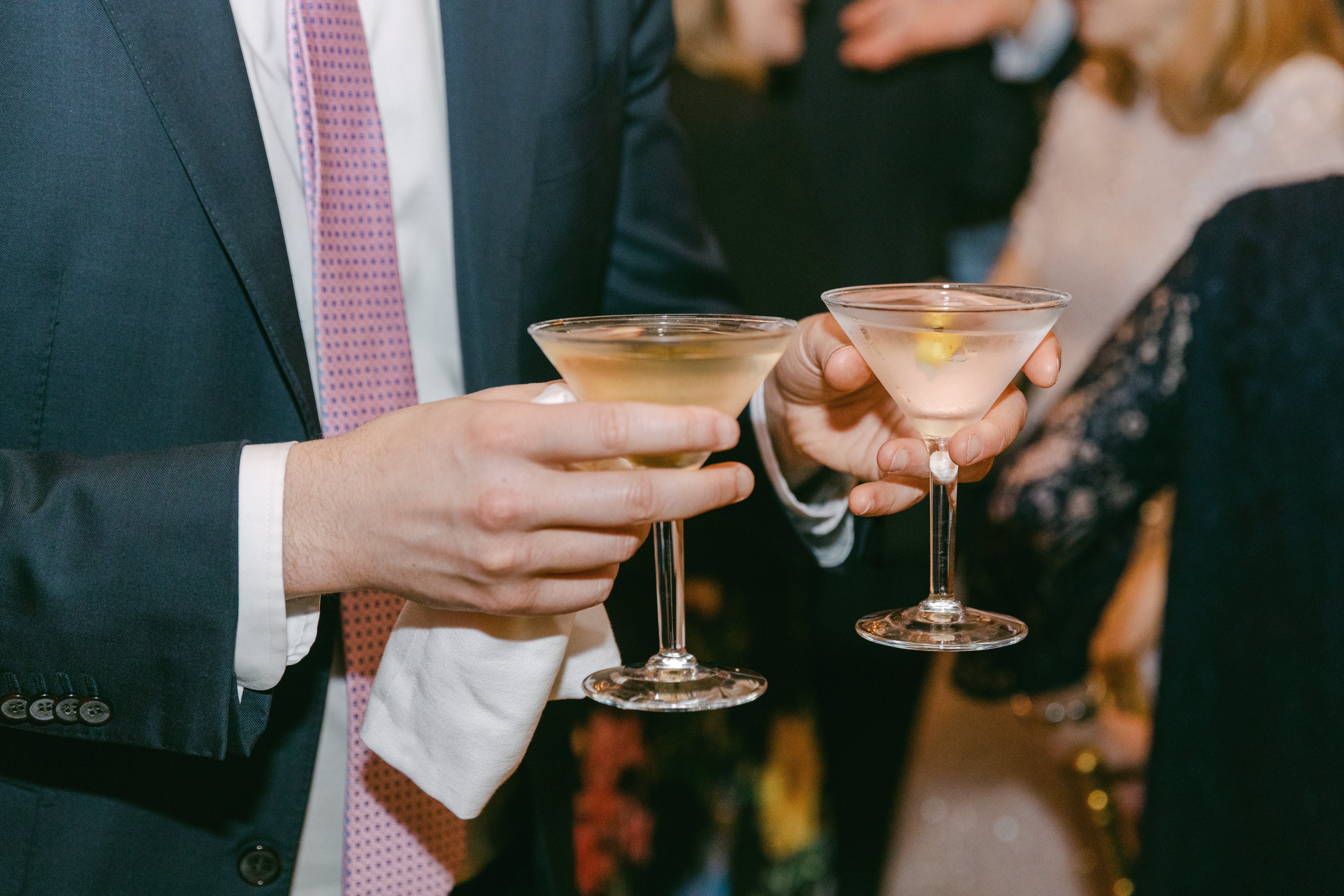
Luxury’s next advantage may come from what a brand lets people into: a trusted community, a carefully chosen event, or a relationship that continues after the purchase. That’s a meaningful shift. A product or a memorable stay can be copied; a network of relevant privileges and personal service is harder to reproduce.
Private clubs, members’ lounges, invitation-only events, owner groups and client circles all trade on a sense of privacy and belonging. The model can work well beyond hotels, too. Fashion houses, watchmakers, car brands, wellness companies and real estate developers can bring customers together around shared interests and attentive experiences.
Here’s the catch: selective access can quickly become social exclusion. A community should feel considered, not closed off by assumptions about race, class, gender, age, nationality, body type or spending power. The best ones earn loyalty through the quality of their experiences and the care of their service, not through a list of people left outside.
Business implication:
Be clear about who a community is for, what members receive and how the brand makes others feel welcome. Exclusivity should communicate discernment and care, not discrimination.
Brands are building worlds around the core product
Luxury hospitality companies are extending into residences, yachts, wellness clubs, retail partnerships, culinary concepts and branded experiences. The larger idea is that a brand can shape parts of a customer’s life, rather than appear only when someone books a room or buys an item.
A hotel name can sit on a residence. A fashion house can open a restaurant. A wellness retreat can build a daily health platform. A private club can serve as a social network, business connection and cultural calendar. These extensions give customers more ways to engage, but they also raise the bar for consistency: each part has to feel like it belongs to the same brand.
Business implication:
Think in connected experiences. A collection of unrelated brand extensions won’t make a coherent world for customers.
Health, culture and the meaning of status
Longevity is poised to become a major luxury category over the next decade. For wealthy consumers, health is increasingly treated as a primary asset, creating interest in preventive diagnostics, recovery, sleep science, nutrition, mental performance and medical hospitality.
Trust will decide whether those offers carry weight. Luxury language can’t substitute for medical credibility; brands entering this space need qualified experts, strong privacy practices and evidence suited to the care they promise.
Business implication:
Longevity demands a higher standard of evidence, privacy and care than conventional wellness.
Culture is another increasingly visible way consumers signal taste. Art fairs, design weeks, film festivals, gastronomy, music, sport and private cultural access can all provide visibility, community and insider status. For brands, that creates room to take part in culture instead of relying on advertising alone. But audiences can tell when a company is borrowing cultural standing without giving anything back.
Business implication:
Build a strategy for contributing to culture, not just increasing sponsorships.
Use AI to prepare better human service
AI will change luxury operations, but full automation is unlikely to be the winning formula. Its value is more likely to show up in the preparation and coordination that let service professionals do their jobs well. That means an innovative approach led by luxury service professionals can use AI to:
- Prepare client advisors for appointments
- Anticipate service needs
- Make inventory easier to see
- Personalize itineraries
- Improve service recovery
- Carry customer preferences across properties or markets
- Remove operational friction
The client should notice the thoughtfulness, not the machinery behind it.
Business implication:
Luxury’s next service edge will depend on combining useful intelligence with taste and human care.
Executive Takeaways: What Luxury Businesses Should Do Next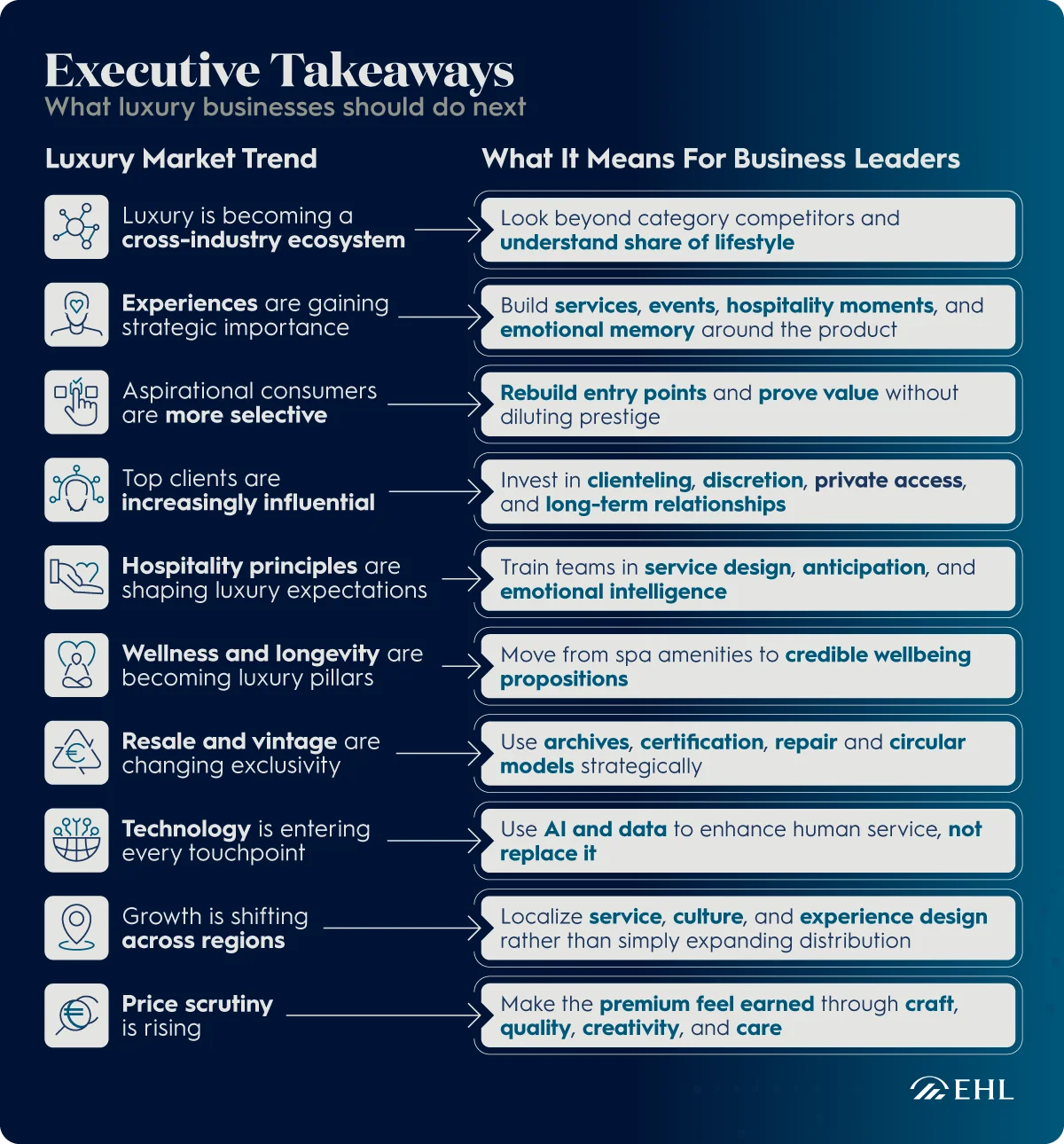
Conclusion: The Future of Luxury Is Experience-Led
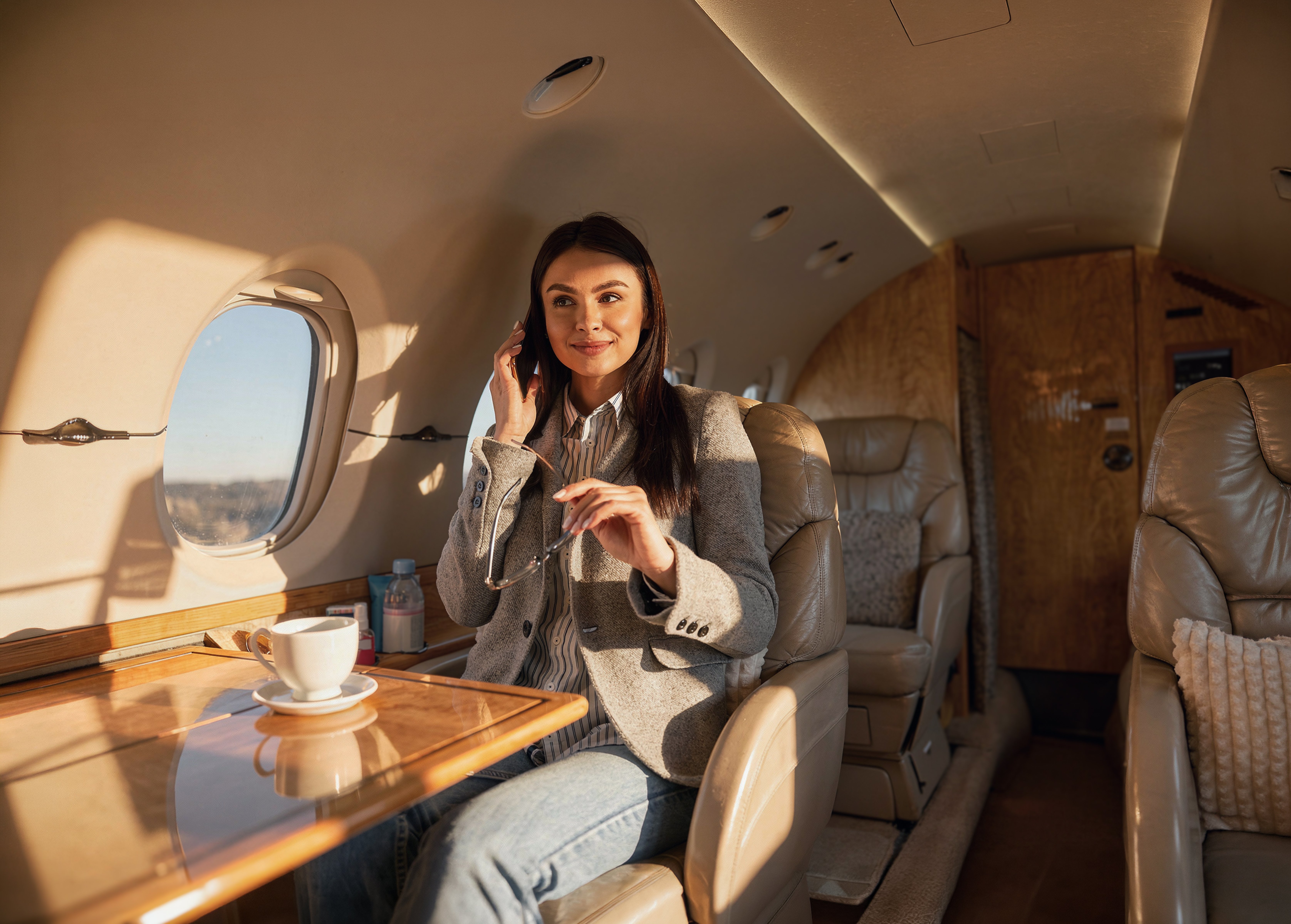
The signals here don’t add up to a simple story of luxury either booming or fading. They suggest a more selective market, where customers still care about beauty, rarity and craft, while placing greater value on time, privacy, wellness, access, belonging and meaning.
For businesses, that changes the job. Product excellence still matters, but it has to connect to the human experience around the product. Service becomes part of the strategy; culture becomes part of the value; personalization requires discipline and judgment.
If you’re working in luxury, the test is whether the world around your product makes the relationship more valuable over time. Desirability won’t rest on the object alone. It will depend on everything the brand makes possible around it.

Discussion
Sign in to join the discussion.