Human-relevant tools are expanding as researchers seek safer, more predictive drug tests and better outcomes for animals already in laboratories.
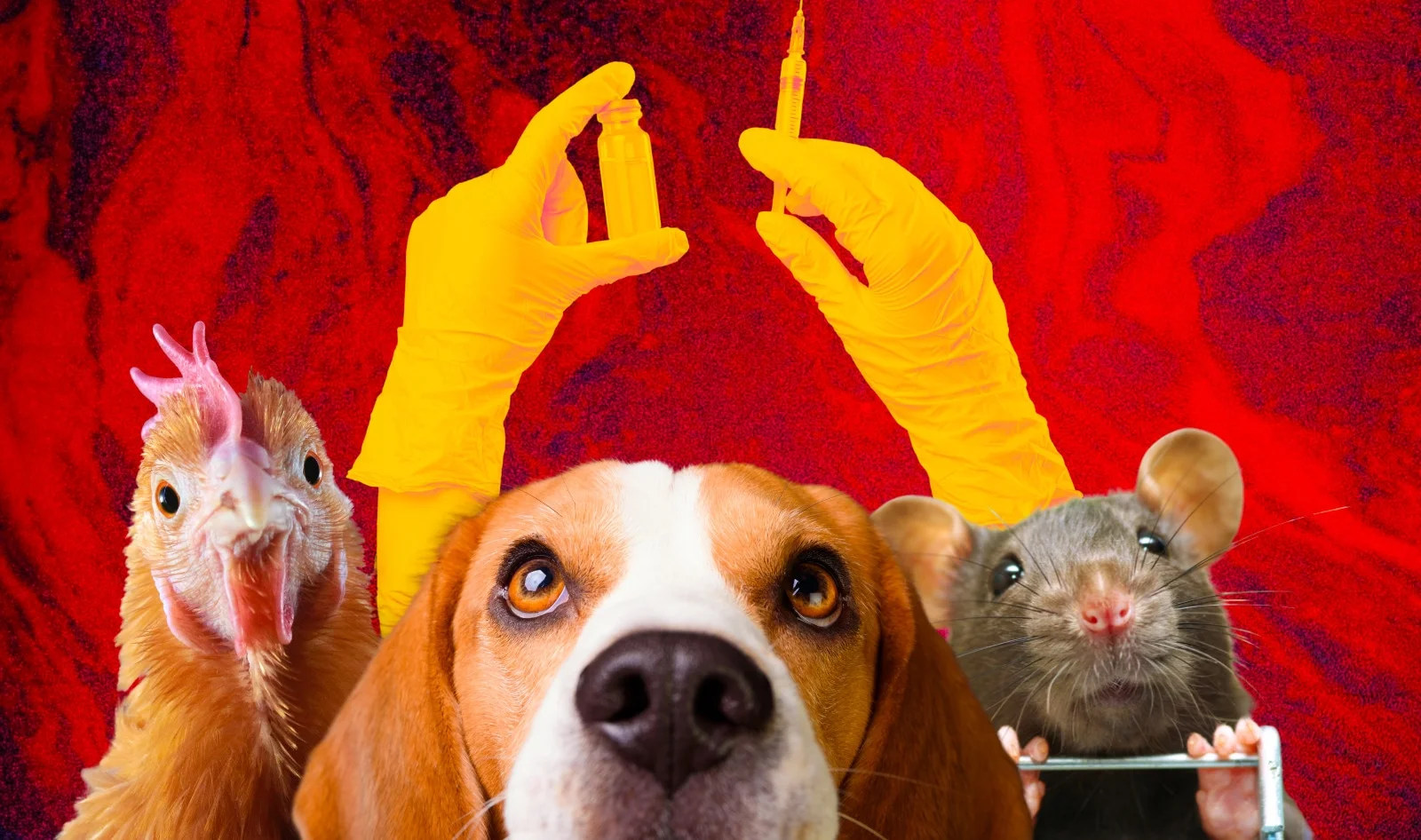
Animal testing can miss risks that matter to people and flag dangers that don’t translate across species. That mismatch is one reason researchers and agencies are exploring human-relevant methods, from tumor-on-a-chip devices to organoids and machine learning. The transition is underway, though it also raises a practical question: how to care for animals already used in research.
The thalidomide tragedy remains a stark example of the limits of animal studies. In the 1950s, the drug was tested on rats, where it appeared safe for pregnancy. In humans, it could disrupt embryonic development. After it was prescribed in 46 countries, more than 10,000 children were born with severe birth defects, including limb differences.
Different biology, different results
Animal research raises ethical concerns because experiments can involve infection, force-feeding, burns, deliberate blindness and other harmful procedures. An estimated 100 million animals—including rats, mice, guinea pigs, rabbits, dogs and cats—are used in US research and testing each year. Many are euthanized after experiments if they haven’t already died.
Public opinion is also shifting. A 2026 Gallup poll found that nearly half of Americans considered animal testing morally wrong. In a 2024 poll of more than 2,200 Americans, the Physicians Committee for Responsible Medicine (PCRM) found that 80 percent supported or strongly supported a US government commitment to phase out animal experiments.
The scientific case for alternatives centers on the gap between species. More than 90 percent of drug candidates that appear safe or effective in animal studies ultimately fail in human clinical trials. The number doesn’t mean animal research has no scientific value, but it does point to a persistent problem: results in one species don’t reliably predict results in another.
“On a fundamental level, we have different biologies, different physiologies, different immune systems,” Gwen Kaminski, vice president of advancement at the National Anti-Vivisection Society (NAVS), told VegNews.
 Millions of animals, including rats, mice, and guinea pigs, are used in research across the US every year.
Penicillin illustrates the problem in the other direction. The antibiotic, discovered in the 1920s, has saved around 500 million human lives, yet it can be toxic to laboratory animals such as guinea pigs and hamsters. If researchers had relied on those animal responses alone, penicillin might have seemed too dangerous to pursue.
“We process drugs and other substances differently,” Kaminski said. “So how a treatment works in another species does not necessarily predict how that will translate to humans. That is why we see the 90-plus percent failure rate.”
 Animal testing is unreliable because humans and other animals have different biologies, maintains NAVS.
For NAVS, which has worked toward ending animal testing for nearly a century, the alternatives need to advance on several fronts at once. Kaminski points to researchers developing new methods, public agencies establishing routes to validate them, and public attitudes changing. “The future that NAVS has been working toward for nearly a century is no longer hypothetical,” she said.
Human-relevant methods move into research
US policy has begun to make room for methods that don’t depend on animal testing. A 2022 law removed the blanket federal requirement that every new drug undergo animal testing. In 2025, the Food and Drug Administration published its Roadmap to Reducing Animal Testing in Preclinical Safety Studies, calling for faster adoption of “human-relevant methods.”
Kaminski says federal agencies, including the FDA, the National Institutes of Health and the Environmental Protection Agency, are making commitments to reduce and ultimately eliminate the use of animals in research. That shift still depends on developing and validating tools that can answer specific research questions.
One example is a tumor-on-a-chip device developed by Ian Smith, a bioengineering doctoral student at the University of Maryland, with support from NAVS. The device is designed to help medical professionals assess how particular cancers may respond to different treatments. If it can identify ineffective or harmful options earlier, it could help reduce the burden of trial and error for patients facing cancer care.
Organoids offer another route. These small, three-dimensional structures are grown from cells to mimic some features of human organs. They give researchers a way to study biological responses in lab-grown human tissue, although their usefulness depends on how well they model the process under investigation.
Machine learning and artificial intelligence can help researchers analyze large datasets and search for potential treatments. At the Massachusetts Institute of Technology in Cambridge, AI has helped scientists identify compounds aimed at drug-resistant infections, including gonorrhea, MRSA and Mycobacterium tuberculosis, the bacterium that causes tuberculosis.
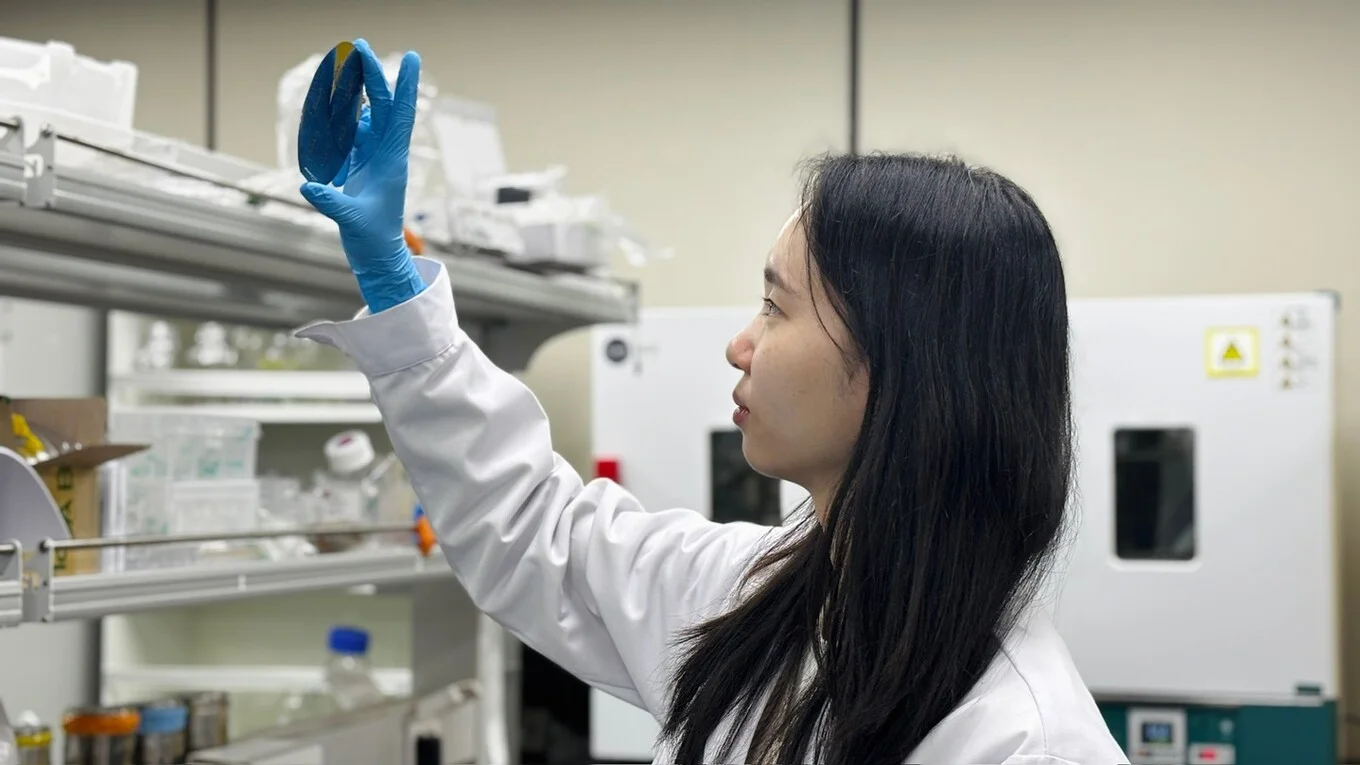 Animal-free research methods are often more reliable because they reflect human biology. | NAVS
These approaches differ, but Kaminski sees a shared advantage: they can reflect human biology directly. “What we're seeing is that they are already proving more effective in making progress toward the treatments and cures that have eluded us for decades, as a result of the reliance on animal testing,” she said.
For research that still needs animal data, the FDA has developed AnimalGAN, an AI program that uses historical animal-testing data to predict how animals might react to new chemicals. It applies computational methods to existing data rather than requiring a new experiment for every prediction.
“A future without animal testing includes more effective science that is not only more compassionate toward animals but ultimately better for human health,” says Kaminski

Planning for animals leaving laboratories
Changing research methods is only part of the transition. Animals already in laboratories may need transport, rehabilitation, medical care and support as they move into sanctuaries or adoptive homes. NAVS says it works on public education, policy advocacy and research funding while also supporting those animals.
“We have always recognized that we're not going to change science with just one technology or one law,” Kaminski said. “We really have to change the whole ecosystem.”
Seventeen states currently have post-research adoption laws, according to Kaminski. Rescues and sanctuaries provide practical help, from moving animals to finding them care and homes. She expects demand for those services to increase as the system changes.
 NAVS is ensuring that as many research animals as possible find their happy ending. | NAVS
NAVS works with the Beagle Freedom Project, which rescues laboratory animals, and has recently begun partnering with Big Dog Ranch Rescue, a US dog rescue. This past summer, more than 2,000 beagles were released from Ridglan Farms, a research facility in Wisconsin. NAVS funded transport for the final 155 to a sanctuary in Florida.
“We're working on both ends of the equation,” Kaminski said. “We're working to change the science to ensure no animals are used in the first place, but we can't forget about those who are already in the system. We have to provide for their safety today, as well.”
Progress depends on building the alternatives
The case for animal-free research links animal welfare with the quality of medical evidence. NAVS argues that methods based on human biology can improve the search for treatments while reducing animal suffering. The US Department of Agriculture’s 2025 Animal Use Statistics reported a modest decline in the number of animals used in laboratories nationwide, a sign of movement rather than a completed transition.
Researchers and public agencies will need to keep developing and validating alternatives. The public can also support organizations working on humane science and follow opportunities to take part in policy discussions, Kaminski said. The central test will be whether new methods can deliver useful, dependable evidence across the range of questions researchers now study with animals.
“The most exciting part is that the future that is coming about is not creating a choice between compassion for animals and better science,” Kaminski said. “The same technologies that can spare animals from suffering can also save human lives.”
Thank you to NAVS for partnering with VegNews on this story.



Discussion
Sign in to join the discussion.